Digital Anemometer / Wind Meter in Pakistan
Buy Digital Anemometers and Wind Meters in Pakistan from Test Instruments Pakistan. Explore a range of digital wind speed meters, handheld anemometers, vane anemometers, hot-wire anemometers and air velocity meters for professional measurement applications.
Whether you need an instrument for HVAC inspection, air conditioning maintenance, industrial ventilation, laboratory testing or outdoor wind monitoring, selecting the right anemometer helps you obtain reliable air velocity and airflow readings.
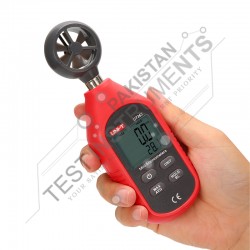
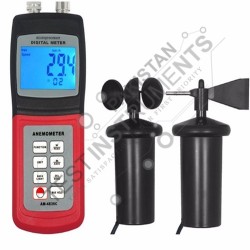
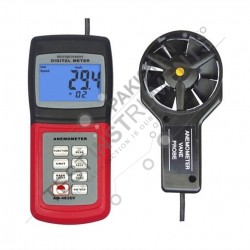
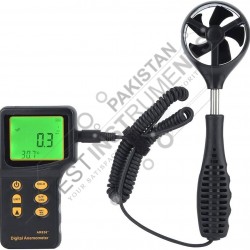
A digital anemometer, also known as a wind meter or air velocity meter, is an electronic measuring instrument used to measure the speed of moving air. Depending on its design and functions, it may also measure air temperature and calculate volumetric airflow in units such as CFM and CMM.
These instruments are widely used by HVAC technicians, mechanical engineers, environmental monitoring professionals, industrial maintenance teams, researchers and ventilation specialists. Digital readings are displayed on an LCD screen, making measurements convenient for field inspections and technical work.
At Test Instruments Pakistan, you can explore different types of wind meters from brands and manufacturers listed in our category, including Smart Sensor, Mastech, UNI-T, Landtek and Testo. Product specifications and availability vary by model.
What Does a Digital Anemometer Measure?
A digital anemometer primarily measures the velocity of moving air. Depending on the instrument, it may provide additional measurements and calculated values for ventilation and environmental applications.
- Wind Speed: Measures how fast air is moving.
- Air Velocity: Measures the speed of airflow through a particular location, such as a ventilation duct or air outlet.
- Air Volume / Volumetric Flow: Some models calculate airflow volume, commonly displayed in CFM, CMM or CMS, using the measured velocity and entered area.
- Air Temperature: Selected anemometers include a temperature sensor for measuring surrounding air temperature.
- Additional Environmental Readings: Certain multifunction models may measure humidity, dew point or other parameters. Check the individual product specifications.
Types of Digital Anemometers Available in Pakistan
Digital wind meters are available in different designs and sensor technologies. The correct type depends on the airflow conditions, measurement location and accuracy requirements.
1. Digital Vane Anemometer
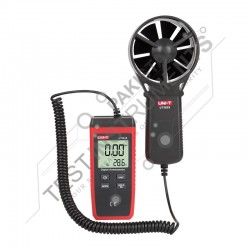
A vane anemometer uses a rotating propeller or impeller to measure air movement. It is commonly used for general wind speed measurements, HVAC inspections and ventilation testing.
Suitable for: Air outlets, ventilation systems and general airflow measurements.
2. Hot-Wire Anemometer
A hot-wire anemometer measures airflow using a heated sensor. Air moving across the sensor changes its heat loss, which the instrument uses to determine air velocity.
Suitable for: Low-velocity airflow, HVAC ducts, grilles and controlled ventilation measurements.
Explore Hot-Wire Anemometers
3. Airflow Meter with Wire Probe
These instruments use a connected or extended probe to measure air velocity in locations that may be difficult to reach with a compact integrated sensor.
Suitable for: Air ducts, ventilation outlets and HVAC maintenance.
View Airflow Meters with Wire
4. Pocket-Size Anemometer
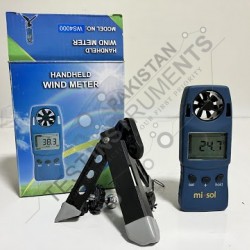
Pocket wind meters are compact and portable instruments designed for convenient outdoor wind speed measurements and everyday field use.
Suitable for: Outdoor inspections, weather observation and portable wind measurements.
5. Data-Logging Anemometer
Selected digital anemometers can store measurement records for later review. Depending on the model, recorded data may be transferred to a computer through a USB connection or compatible software.
Suitable for: Repeated measurements, reporting and airflow monitoring projects.
6. Digital Airflow Meter
An airflow meter measures air velocity and may calculate volumetric airflow when the duct or opening dimensions are entered into the instrument.
Suitable for: HVAC balancing, ventilation inspections and airflow analysis.
Popular Digital Anemometer Models
Test Instruments Pakistan lists different anemometer models for general wind speed measurement, HVAC applications and professional airflow testing. Some examples from the category include:
| Brand / Model | Instrument Type | Application / Key Details |
|---|
| AS836 Smart Sensor | Digital Airflow Anemometer | Air velocity and airflow measurement. |
| AS856 Smart Sensor | Digital Airflow Anemometer | Air velocity, airflow and temperature measurement with a split-type probe. |
| AR816+ Smart Sensor | Digital Wind Anemometer | Portable wind speed and air velocity measurement. |
| AR866A Smart Sensor | Hot-Wire Anemometer | Air velocity and airflow measurement using a hot-wire sensor. |
| ST6816 Smart Sensor | Digital Anemometer | Air velocity and airflow measurement with multiple measurement units. |
| MS6252A Mastech | Digital Anemometer | Air velocity, airflow calculation and selected measurement functions. |
| AM4822 Landtek | Digital Wind Speed Meter | Handheld wind speed and temperature measurement. |
| ST619 Standard | CFM Anemometer | Air velocity, airflow and temperature measurement. |
Specifications, features, prices and availability may vary. Visit the relevant product listing or contact our team to confirm the details of a particular model.
Wind Speed and Airflow Measurement Units
Digital anemometers commonly support multiple units so that users can select the measurement format required for their work.
| Unit | Full Form | Common Use |
|---|
| m/s | Metres per second | Engineering, HVAC and scientific measurements. |
| km/h | Kilometres per hour | Weather and outdoor wind speed measurements. |
| ft/min (FPM) | Feet per minute | HVAC and ventilation airflow velocity. |
| ft/s | Feet per second | Air velocity measurements. |
| mph | Miles per hour | Outdoor wind speed measurements. |
| knots | Nautical miles per hour | Marine and aviation applications. |
| CFM | Cubic feet per minute | Volumetric airflow measurement. |
| CMM | Cubic metres per minute | Volumetric airflow measurement. |
| CMS | Cubic metres per second | Volumetric airflow measurement. |
Applications of Digital Anemometers
Digital anemometers are used in many professional environments where measuring air movement is important for system performance, maintenance and environmental assessment.
- HVAC Systems: Checking air velocity at supply vents, return grilles and ventilation outlets.
- Air Conditioning Maintenance: Evaluating airflow performance in heating, ventilation and air conditioning systems.
- Industrial Ventilation: Measuring air movement in factories, production facilities and industrial workspaces.
- Air Duct Inspection: Measuring airflow in ventilation ducts and supporting air balancing work.
- Weather Monitoring: Measuring outdoor wind speed for environmental observation.
- Laboratories: Checking airflow conditions in controlled testing and research environments.
- Cleanrooms: Assessing airflow at designated locations as part of environmental monitoring procedures.
- Wind Energy: Supporting field measurements and wind condition assessments with suitable instruments.
- Marine and Aviation: Measuring wind speed where the instrument's range and accuracy meet the application requirements.
- Building Maintenance: Inspecting ventilation performance in commercial and residential buildings.
Important Features of a Digital Wind Meter
Modern digital anemometers may include several functions that make airflow and wind speed measurements easier. Features differ between models, so review the product specifications before purchasing.
- Multiple Measurement Units: Select between m/s, km/h, ft/min, mph and knots, depending on the model.
- Airflow Calculation: Selected models calculate CFM, CMM or CMS after the required measurement area is entered.
- Temperature Measurement: Some instruments include an air temperature sensor.
- Data Hold: Freezes the displayed measurement for convenient reading and recording.
- MAX / MIN / Average: Records or displays maximum, minimum and average readings on supported models.
- Backlit LCD: Helps users read measurements in low-light conditions.
- Data Logging: Stores readings for later analysis on selected models.
- USB Connectivity: Allows data transfer or computer communication where supported.
- Portable Design: Handheld and pocket-size models are convenient for field inspections.
- Probe Design: Extended, wired or telescopic probes can help access ducts and difficult measurement locations.
How to Choose the Best Anemometer in Pakistan
Before buying a digital anemometer, consider the measurement environment and the type of airflow you need to inspect. A compact wind meter may be suitable for outdoor measurements, while HVAC professionals may need an instrument with a probe and airflow calculation functions.
- Identify the Measurement: Decide whether you need wind speed, air velocity, volumetric airflow or temperature measurement.
- Select the Sensor Type: Choose a vane model for general airflow measurements or a hot-wire model for applications requiring sensitivity to low air velocities.
- Check the Measurement Range: Ensure the instrument supports the minimum and maximum air speeds expected in your application.
- Review Accuracy and Resolution: Compare the manufacturer's accuracy specifications and display resolution.
- Check Measurement Units: Confirm that the meter supports the units required for your calculations and reports.
- Consider Airflow Calculation: If you need CFM or CMM, select a model that supports volumetric flow calculation and allows area input.
- Evaluate Probe Design: Consider a wired, telescopic or extended probe for measurements inside ducts and restricted spaces.
- Review Data Functions: Check whether data logging, USB connectivity, MAX/MIN and average readings are necessary.
- Confirm Calibration Requirements: For professional or compliance-related work, consider calibration and the measurement uncertainty requirements of your application.
Difference Between Vane and Hot-Wire Anemometers
Vane and hot-wire anemometers use different sensor principles. The choice depends on the airflow conditions and measurement task.
| Comparison | Vane Anemometer | Hot-Wire Anemometer |
|---|
| Measuring Principle | Uses a rotating vane or impeller. | Uses heat loss from a heated sensor. |
| Typical Applications | General airflow and wind speed measurement. | Low-velocity airflow and HVAC inspection. |
| Sensor Design | Mechanical rotating sensor. | Thermal sensing element. |
| Probe Access | Integrated or remote vane designs are available. | Often available with a slim probe for restricted spaces. |
| Selection Consideration | Check vane size, airflow range and measurement accuracy. | Check low-speed sensitivity, probe dimensions and operating range. |
What Is the Difference Between Wind Speed and Airflow?
Wind speed or air velocity describes how fast air moves past a particular point. It is commonly measured in metres per second (m/s), feet per minute (FPM) or kilometres per hour (km/h).
Volumetric airflow describes the volume of air passing through a given area over a specific period. It is commonly expressed in CFM (cubic feet per minute) or CMM (cubic metres per minute).
An anemometer that supports airflow calculation uses the measured air velocity and the entered cross-sectional area to estimate the volume of air passing through that opening. Correct area measurement and a suitable measurement procedure are important for meaningful results.
How to Use a Digital Anemometer
- Read the instrument's user manual and check that the sensor and probe are suitable for the intended measurement.
- Switch on the anemometer and select the required measurement unit.
- Position the vane or probe in the airflow according to the manufacturer's instructions.
- Allow the reading to stabilise before recording the measurement.
- For airflow volume calculations, enter the correct duct or opening area if the instrument requires it.
- Use data hold, average or data logging functions if available and needed.
- Repeat measurements at appropriate locations when assessing airflow across a duct or outlet.
- Store the instrument and sensor carefully after use.
Measurement tip: When measuring air velocity in a duct, a single reading may not represent the average airflow across the entire cross-section. Follow an appropriate measurement traverse procedure where accurate airflow assessment is required.
Digital Anemometer Price in Pakistan
The digital anemometer price in Pakistan varies according to the brand, sensor technology, measurement range, accuracy, probe design and additional functions. Basic handheld wind meters generally have different specifications and pricing from professional hot-wire instruments and advanced airflow meters.
Factors that can affect the price include:
- Vane, hot-wire or other sensor technology.
- Air velocity measurement range and accuracy.
- Airflow calculation in CFM, CMM or CMS.
- Temperature measurement and additional environmental functions.
- Data logging, memory and computer connectivity.
- Brand, model and included accessories.
For the latest product prices and availability, browse our Digital Anemometers / Wind Meter category or contact Test Instruments Pakistan for a quotation.
Related Environmental and Testing Instruments
Depending on your inspection requirements, you may also need other environmental and measurement instruments. Explore these related categories from Test Instruments Pakistan:
Why Choose Test Instruments Pakistan?
Test Instruments Pakistan provides measuring and testing instruments for industrial, electrical, environmental, laboratory and maintenance applications. Our digital anemometer category includes different models for wind speed measurement, HVAC inspection and airflow testing.
- Different types of digital anemometers and wind meters.
- Models from recognised instrument brands listed in our catalogue.
- Options for handheld wind speed and professional airflow measurement.
- Product information to help compare measurement ranges and features.
- Assistance with product selection, pricing and availability.
Buy Digital Anemometer / Wind Meter in Pakistan
Looking for a digital wind meter, handheld anemometer, hot-wire anemometer or HVAC airflow meter? Browse our product range at Test Instruments Pakistan and select an instrument according to your measurement requirements.
Contact our team for product specifications, current prices and availability.
Explore Digital Anemometers / Wind Meters
Frequently Asked Questions About Digital Anemometers
1. What is a digital anemometer used for?
A digital anemometer is used to measure wind speed and air velocity. Depending on the model, it can also measure air temperature and calculate volumetric airflow. It is commonly used in HVAC systems, ventilation inspections, laboratories, industrial maintenance and outdoor weather monitoring.
2. What is the price of a digital anemometer in Pakistan?
The price of a digital anemometer in Pakistan depends on its brand, sensor type, measurement range, accuracy and features. Basic handheld wind meters, vane anemometers and professional hot-wire airflow meters can have different prices. Contact Test Instruments Pakistan for current prices and availability.
3. What is the difference between an anemometer and a wind meter?
An anemometer is the technical name for an instrument that measures air or wind speed. A wind meter is a commonly used name for a wind speed measuring instrument. Both terms are often used to describe handheld digital wind speed meters.
4. Can an anemometer measure airflow?
Some anemometers can calculate volumetric airflow in units such as CFM, CMM or CMS. These models use measured air velocity and the entered cross-sectional area to calculate airflow volume. Not every basic wind meter includes this function.
5. What does CFM mean in an anemometer?
CFM stands for cubic feet per minute. It is a unit of volumetric airflow that describes how much air passes through a particular area in one minute. It is commonly used in HVAC and ventilation applications.
6. What is the difference between a vane and hot-wire anemometer?
A vane anemometer uses a rotating propeller or impeller to measure air velocity. A hot-wire anemometer uses a heated sensor and measures changes in heat loss caused by moving air. Vane models are commonly used for general airflow checks, while hot-wire models are often selected for low-velocity airflow applications.
7. Which anemometer is best for HVAC applications?
The best anemometer for HVAC work depends on the measurement location and required readings. A vane model may be suitable for general air outlet measurements, while a hot-wire model with a suitable probe may be preferable for low-speed airflow or restricted duct locations. Select a model with the required range, accuracy and airflow functions.
8. Can a digital anemometer measure temperature?
Yes, selected digital anemometers include an air temperature sensor. However, temperature measurement is not available on every model. Check the instrument's specifications before purchasing if temperature measurement is required.
9. What units are used to measure wind speed?
Common wind speed units include metres per second (m/s), kilometres per hour (km/h), miles per hour (mph), feet per minute (FPM), feet per second (ft/s) and knots. Available units depend on the anemometer model.
10. How do you measure air velocity with an anemometer?
Switch on the instrument, select the required unit and position its sensor in the airflow according to the manufacturer's instructions. Allow the reading to stabilise and record the displayed air velocity. For duct measurements, use an appropriate measurement procedure to obtain representative readings.
11. Can an anemometer measure air velocity in HVAC ducts?
Yes. Suitable vane or hot-wire anemometers can measure air velocity inside HVAC ducts. Instruments with an extended or wired probe can help reach measurement points inside ducts and ventilation systems.
12. What is the difference between air velocity and airflow?
Air velocity is the speed at which air moves past a point, commonly measured in m/s or FPM. Airflow volume is the amount of air passing through a cross-sectional area over time, commonly measured in CFM or CMM.
13. What is a pocket-size anemometer?
A pocket-size anemometer is a compact, portable wind meter designed for convenient wind speed measurements. It is useful for outdoor inspections, weather observation and other applications where portability is important.
14. What is a data-logging anemometer?
A data-logging anemometer is a wind or airflow meter that can store measurement readings in its internal memory. Depending on the model, the recorded data may be reviewed on the instrument or transferred to a computer for analysis and reporting.
15. Can an anemometer measure low air velocity?
Yes, but the minimum measurable air velocity depends on the sensor type and model specifications. Hot-wire anemometers are often selected for low-velocity airflow applications. Always compare the instrument's stated measurement range and accuracy with your requirements.
16. Which brand of digital anemometer is available at Test Instruments Pakistan?
Our digital anemometer category includes models from brands and manufacturers such as Smart Sensor, Mastech, UNI-T, Landtek and Testo. Product selection and availability can change, so check the category or contact us for current options.
17. Where can I buy a digital anemometer in Pakistan?
You can explore digital anemometers and wind meters at Test Instruments Pakistan. Visit our online category to compare available models or contact our team for product details, quotations and availability.