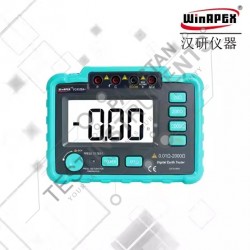
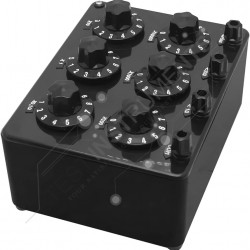
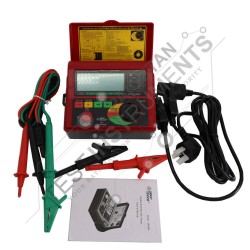
Earth Ground Resistance Tester in Pakistan
Looking for a reliable Earth Ground Resistance Tester in Pakistan for electrical safety inspections, industrial maintenance, or grounding system verification? Test Instruments Pakistan offers a range of earth resistance testing instruments designed to measure the resistance of grounding electrodes and electrical earthing systems.
An earth ground resistance tester, also known as an earth resistance meter or grounding resistance tester, is used to evaluate the effectiveness of an electrical grounding system. Proper grounding helps provide a controlled path for fault current and supports the safe operation of electrical installations, equipment, and protective devices.
These instruments are commonly used by electrical engineers, electricians, maintenance technicians, contractors, testing laboratories, and industrial safety professionals. Applications include commercial buildings, factories, power distribution networks, substations, telecom towers, solar installations, and lightning protection systems.
Our collection includes digital earth resistance testers, analog earth testers, clamp-on ground resistance meters, 3-wire testers, 4-wire testers, and advanced soil resistivity testing instruments.
Explore the complete Earth Ground Resistance Tester collection at Test Instruments Pakistan to compare available models and their specifications.
What Is an Earth Ground Resistance Tester?
An Earth Ground Resistance Tester is an electrical measuring instrument used to determine the resistance of an earthing or grounding system. It helps assess how effectively an earth electrode or grounding network is connected to the surrounding soil.
The measured resistance is generally expressed in ohms (Ω). The instrument applies a controlled test signal through the grounding system and evaluates the electrical response using the selected measurement method.
Depending on the instrument, testing may use auxiliary earth stakes, two-wire or three-wire connections, four-terminal measurement, or a clamp-on method. The correct method depends on the grounding arrangement and the type of tester.
Why Is Earth Resistance Testing Important?
- Electrical Safety: Helps evaluate grounding system performance and supports protection against electrical hazards.
- Equipment Protection: Helps identify grounding problems that may affect electrical equipment and installations.
- Grounding System Maintenance: Helps detect deterioration, loose connections, corrosion, and changes in grounding resistance.
- Electrical Inspection: Supports periodic testing and maintenance of grounding systems.
- Lightning Protection: Helps assess grounding arrangements used in lightning protection installations.
- Industrial Compliance: Provides measurement information for electrical safety inspections and applicable standards.
Types of Earth Ground Resistance Testers
Different earth resistance testers are designed for different grounding configurations and testing requirements. Selecting the correct instrument is important for obtaining meaningful and reliable measurements.
Digital Earth Resistance Tester
Digital earth testers display resistance readings on an LCD screen. They are commonly used for routine grounding system inspections and electrical maintenance.
Typical features may include auto-ranging, data hold, backlight, battery indication, and multiple resistance ranges.
Explore Digital Earth Testers
Clamp-On Earth Resistance Tester
Clamp-on testers measure grounding loop resistance by clamping around a suitable grounding conductor. They can perform measurements without disconnecting the grounding conductor in compatible multi-grounded systems.
Explore Clamp-On Earth Testers
Analog Earth Resistance Tester
Analog earth testers display measurement results using a pointer and graduated scale. They are used for conventional earth resistance testing applications.
Explore Analog Earth Testers
3-Wire Earth Resistance Tester
Three-wire testers commonly use the fall-of-potential method with an earth electrode under test and auxiliary current and potential stakes.
They are suitable for conventional earth electrode resistance measurements where the required test area and stake positions are available.
Browse 3-Wire Earth Testers
4-Wire Earth Resistance Tester
Four-wire earth testers use separate current and potential connections to support earth resistance and, on suitable models, soil resistivity measurements.
They are useful for more advanced grounding investigations and testing applications.
Browse 4-Wire Earth Testers
Advanced Earth Resistance Tester
Advanced models may provide multiple testing methods, extended resistance ranges, soil resistivity measurement, data storage, and additional electrical testing functions.
Explore Advanced Earth Testers
Popular Earth Resistance Tester Models in Pakistan
Test Instruments Pakistan lists different models for basic, industrial, and advanced grounding inspection requirements. The following are examples of products listed in our collection.
DUOYI DY-4100B Digital Earth Resistance Tester
Measurement Range: 0.01Ω–2000Ω
Resistance Ranges: 2Ω, 20Ω, 200Ω and 2000Ω
Instrument Type: Digital Earth Resistance Tester
A digital earth resistance testing option for checking grounding systems. The listing also describes earth voltage and DC voltage measurement functions.
View Available DUOYI Models
DUOYI DY1000A Clamp-On Ground Resistance Tester
Instrument Type: Clamp-On Ground Resistance Tester
Measurement Method: Clamp-on
Application: Grounding loop resistance testing
Designed for measuring grounding loop resistance without disconnecting suitable grounding conductors. Its use depends on the availability of a compatible closed grounding loop.
Explore Clamp-On Models
DUOYI DY4100 Digital Ground Resistance Tester
Instrument Type: Digital Ground Resistance Tester
Application: Electrical grounding system testing
Display: Digital measurement display
A portable digital tester listed for measuring grounding resistance in electrical installations and maintenance applications.
Explore DUOYI Earth Testers
UNI-T UT521 Earth Resistance Tester
Resistance Ranges: 20Ω, 200Ω and 2000Ω
Earth Voltage: Up to 200V AC
Additional Functions: Data hold, backlight and data logging
A digital earth resistance tester designed for grounding resistance and earth voltage measurements.
Explore UNI-T Earth Testers
UNI-T UT572 Advanced Earth Resistance Tester
Testing Methods: 2-wire, 3-wire and 4-wire
Additional Measurement: Soil resistivity
Data Logging: 20 measurement records
An advanced testing option for earth resistance and soil resistivity measurement applications.
Explore Advanced Earth Testers
KYORITSU KEW4106 Earth Resistance & Resistivity Tester
Instrument Type: Earth Resistance and Resistivity Tester
Resistance Measurement: Multiple ranges
Application: Grounding and soil resistivity testing
A professional testing option for earth resistance and soil resistivity measurements in electrical and grounding applications.
Explore Advanced Earth Testers
MASTECH MS5209 Analog Earth Resistance Tester
Instrument Type: Analog Earth Resistance Tester
Display: Analog pointer display
Application: Earth resistance and earth voltage testing
A conventional analog earth tester listed for grounding system inspection and measurement applications.
Explore Analog Earth Testers
SEW ST1820ER 3-Wire Digital Earth Resistance Tester
Resistance Ranges: 20Ω, 200Ω and 2000Ω
Resolution: 0.01Ω on the 20Ω range
Measurement Error: ±(2.0% + 2 digits)
A three-wire digital earth resistance tester for grounding resistance and earth voltage testing applications.
Explore 3-Wire Earth Testers
Earth Resistance Tester Specifications Comparison
Compare the following models according to their measurement methods and listed specifications. Not all earth testers have the same measurement functions or operating principle.
| Model | Brand | Instrument Type | Key Specifications | Application |
|---|
| DY-4100B | DUOYI | Digital Earth Tester | 0.01Ω–2000Ω | Ground resistance measurement |
| DY1000A | DUOYI | Clamp-On Earth Tester | Clamp-on measurement method | Grounding loop resistance |
| UT521 | UNI-T | Digital Earth Tester | 20Ω, 200Ω and 2000Ω ranges | Earth resistance and voltage |
| UT572 | UNI-T | Advanced Earth Tester | 2-wire, 3-wire, 4-wire and soil resistivity | Advanced grounding inspection |
| KEW4106 | KYORITSU | Earth Resistance & Resistivity Tester | Multiple resistance ranges | Earth resistance and soil resistivity |
| MS5209 | MASTECH | Analog Earth Tester | Analog display | Earth resistance testing |
| ST1820ER | SEW | 3-Wire Digital Earth Tester | 20Ω, 200Ω and 2000Ω ranges | Ground resistance testing |
Note: Product specifications may vary by model version. Check the individual product listing and manufacturer's technical documentation before selecting an instrument.
How Does an Earth Ground Resistance Tester Work?
An earth resistance tester applies a controlled electrical test signal to a grounding system and measures the resulting electrical response. The instrument uses the measured values to determine resistance, which is displayed in ohms (Ω).
The exact operating principle depends on the selected test method. Conventional earth testers often use auxiliary electrodes placed in the soil, while clamp-on testers use electromagnetic coupling to measure grounding loop resistance in suitable installations.
1. Three-Point Fall-of-Potential Method
The fall-of-potential method is commonly used to measure the resistance of an earth electrode. The tester is connected to the electrode under test and two auxiliary stakes: a current stake and a potential stake.
The instrument passes a test current through the earth circuit and measures the voltage response. The resistance is calculated using the relationship between voltage and current. The potential stake is moved to suitable positions to evaluate the measurement and identify an appropriate test region.
2. Four-Terminal Measurement Method
Four-terminal earth testing uses separate current and potential connections. Separating these connections helps reduce the influence of test lead and contact resistance in suitable measurement configurations.
Some advanced instruments also support soil resistivity measurements using auxiliary electrodes and a specified electrode arrangement.
3. Clamp-On Ground Resistance Measurement
A clamp-on earth tester uses a clamp jaw to couple a test signal into a suitable grounding conductor and measure the resulting loop response. This allows testing without disconnecting the grounding conductor in compatible multi-grounded systems.
Clamp-on testing requires a suitable closed grounding loop. It cannot be used as a universal replacement for fall-of-potential testing of isolated earth electrodes.
Digital Earth Tester vs Clamp-On Earth Tester
Digital earth resistance testers and clamp-on earth testers are both used for grounding inspections, but they use different measurement methods and are suitable for different installation arrangements.
| Feature | Digital Earth Resistance Tester | Clamp-On Earth Tester |
|---|
| Measurement Method | Auxiliary electrode or lead-based testing, depending on model | Electromagnetic clamp-on measurement |
| Grounding Connection | Uses test leads and may require auxiliary earth stakes | Clamps around a suitable grounding conductor |
| Disconnecting Ground | May require disconnection depending on method and setup | Can measure without disconnecting compatible multi-grounded systems |
| Isolated Earth Electrode | Suitable methods are available | Generally requires a closed grounding loop |
| Soil Resistivity | Available on selected advanced models | Not a standard function of ordinary clamp-on testers |
| Typical Use | Electrode resistance and grounding system testing | Ground loop resistance testing in suitable installations |
Applications of Earth Ground Resistance Testers
Earth resistance testing is important in electrical installations where grounding systems are used for safety, equipment protection, and fault-current management.
1. Electrical Installations in Buildings
Earth testers are used to inspect grounding electrodes and earthing systems in commercial buildings, residential installations, offices, and industrial facilities.
2. Power Substations and Distribution Networks
Electrical maintenance teams use earth resistance testing instruments to evaluate grounding systems at substations, distribution facilities, and power infrastructure.
3. Telecom Towers and Communication Sites
Telecom installations use grounding systems to support electrical safety and protection of communication equipment. Earth testers help inspect grounding arrangements at towers and equipment sites.
4. Industrial Plants and Factories
Earth resistance meters are used during electrical maintenance and inspection of grounding networks in manufacturing facilities, production plants, and industrial installations.
5. Lightning Protection Systems
Grounding resistance testing supports inspection of earthing arrangements associated with lightning protection systems. The complete inspection should also consider bonding, conductors, electrodes, and the applicable protection design.
6. Solar Power Installations
Ground resistance testing can help assess the earthing systems used in solar power installations, including equipment frames, inverter installations, and associated grounding networks.
7. Construction and Infrastructure Projects
Contractors and electrical engineers use earth resistance meters during installation, commissioning, maintenance, and inspection of grounding systems.
What Is Soil Resistivity and Why Is It Measured?
Soil resistivity describes how strongly soil opposes the flow of electrical current. It is different from earth electrode resistance, although it is an important factor in grounding system design.
Soil resistivity is commonly expressed in ohm-metres (Ω·m). It is influenced by soil composition, moisture content, temperature, salt concentration, and other environmental conditions.
Soil resistivity testing helps engineers evaluate ground conditions before designing or improving an earthing system. Selected four-terminal earth testers support soil resistivity measurements using appropriate auxiliary electrode arrangements.
Earth Resistance Tester Buying Guide
Choosing the right Earth Resistance Tester depends on the grounding configuration, measurement range, required accuracy, and testing environment. Consider the following factors before purchasing.
1. Measurement Method
Decide whether you need a conventional three-point fall-of-potential tester, a four-terminal tester, or a clamp-on ground resistance meter. The method must be suitable for the grounding system being tested.
2. Resistance Measurement Range
Select an instrument with resistance ranges appropriate for your expected measurements. Common digital earth testers offer multiple ranges, such as 20Ω, 200Ω, and 2000Ω, while advanced models may cover much wider ranges.
3. Measurement Accuracy and Resolution
Check the manufacturer's accuracy specifications and display resolution. Accuracy indicates the expected closeness of the reading to the actual value, while resolution indicates the smallest displayed increment.
4. Soil Resistivity Function
If your work involves grounding system design or soil investigation, consider an advanced model that supports soil resistivity testing.
5. Data Storage and Connectivity
Data logging, measurement recall, Bluetooth, and PC connectivity can be useful for maintenance records and inspection reports. Confirm which features are supported by the specific model.
6. Display and Ease of Operation
A clear LCD, backlight, auto-ranging, data hold, and battery indication can make field testing more convenient.
7. Safety Ratings and Accessories
Check the instrument's safety ratings, supplied test leads, auxiliary earth stakes, carrying case, operating instructions, and applicable measurement categories before purchase.
What Is a Good Earth Resistance Value?
There is no single earth resistance value that is suitable for every electrical installation. The acceptable value depends on the grounding system design, the type of facility, the protective devices, the applicable electrical standards, and project specifications.
Some installations may specify a target such as 5Ω or less, while other applications require different limits. The correct acceptance criteria should always be taken from the applicable code, engineering design, utility requirements, or project documentation.
Important: A low earth resistance reading alone does not prove that an electrical installation is safe. Proper bonding, conductor sizing, continuity, protective device operation, electrode condition, and other safety checks must also be considered.
How to Use an Earth Ground Resistance Tester
The correct procedure depends on the tester and selected measurement method. Always consult the instrument manual and follow the approved electrical safety procedure.
General Fall-of-Potential Testing Steps
- Review the Test Procedure: Identify the grounding electrode under test and confirm the correct method for the installation.
- Inspect the Instrument: Check the tester, test leads, connectors, auxiliary stakes, and battery condition.
- Assess the Installation: Determine whether the electrode can be safely isolated if the chosen procedure requires it.
- Position Auxiliary Stakes: Install the current and potential stakes at the distances and positions specified by the applicable procedure.
- Connect the Test Leads: Connect the instrument according to its terminal markings and manual.
- Select the Measurement Mode: Choose the appropriate resistance range or automatic range setting.
- Perform the Measurement: Initiate the test and allow the instrument to display the result.
- Verify the Reading: Where required, repeat measurements at suitable potential-stake positions to assess the reliability of the result.
- Record the Results: Document the readings, test arrangement, site conditions, and instrument details.
Electrical Safety Warning: Earth resistance testing must be performed by trained personnel using the correct safety procedures. Never disconnect a protective earth conductor from an energized installation without an approved safe isolation procedure. Follow the instrument manual and applicable electrical safety regulations.
Earth Ground Resistance Tester Price in Pakistan
The Earth Ground Resistance Tester price in Pakistan varies according to the brand, measurement range, testing method, accuracy, and additional functions.
Basic digital earth testers are generally designed for routine grounding resistance measurements. Clamp-on models provide a different testing approach for suitable multi-grounded systems, while advanced four-wire instruments may include soil resistivity measurement and additional testing capabilities.
The price may also depend on accessories such as test leads, auxiliary earth stakes, carrying cases, data communication features, and manufacturer specifications.
Visit the Earth Ground Resistance Tester category at Test Instruments Pakistan to compare available products and check current prices and availability.
Related Electrical Testing Instruments
In addition to earth resistance meters, electrical engineers and maintenance professionals use other instruments to inspect electrical installations and protective systems.
-
Digital RCD / ELCB Testers:
Used to test residual current devices and evaluate their operation under specified test conditions. Explore the electrical testing products in our Earth Ground Resistance Tester category.
-
Insulation Resistance Testers:
Used to evaluate insulation resistance in cables, motors, electrical equipment, and installations. These instruments complement grounding inspections but perform a different test.
-
Clamp Meters:
Used for measuring electrical current without opening the conductor circuit. Explore our Clamp Meter collection.
-
Digital Multimeters:
Used for measuring voltage, current, resistance, and other electrical parameters. Browse our Digital Multimeters.
-
Electrical Power Testers:
Used for electrical measurement and system inspection. Explore the Electrical Power Tester category.
Why Choose Test Instruments Pakistan?
Test Instruments Pakistan offers electrical testing and measuring equipment for electricians, electrical engineers, industrial maintenance teams, contractors, laboratories, and commercial users.
- A selection of digital, analog, and clamp-on earth resistance testers.
- Products from recognized electrical instrument manufacturers.
- Different measurement methods and resistance ranges.
- Product specifications to support model comparison.
- Assistance with selecting suitable testing equipment.
- Product inquiry and quotation support.
Frequently Asked Questions About Earth Ground Resistance Testers
1. What is an earth ground resistance tester?
An earth ground resistance tester is an electrical measuring instrument used to measure the resistance of grounding electrodes and earthing systems. It helps evaluate the performance of grounding arrangements in buildings, factories, substations, and other electrical installations.
2. What is the price of an earth resistance tester in Pakistan?
The price depends on the brand, measurement range, accuracy, testing method, and features. Digital, analog, clamp-on, and advanced soil resistivity testers have different price levels. Check the Test Instruments Pakistan category for current prices and availability.
3. What is an earth resistance tester used for?
It is used to measure the resistance of grounding electrodes and earthing systems. Common applications include electrical installations, industrial plants, power substations, telecom towers, solar installations, and lightning protection systems.
4. What is a good earth resistance value?
The acceptable earth resistance value depends on the installation, grounding design, applicable electrical standards, and project requirements. Some projects specify 5Ω or less, but this is not a universal limit. Always follow the applicable code and engineering specification.
5. What is the difference between earth resistance and soil resistivity?
Earth resistance is the resistance measured for a grounding electrode or system and is expressed in ohms (Ω). Soil resistivity describes how strongly the soil opposes current flow and is generally expressed in ohm-metres (Ω·m).
6. How does an earth resistance tester work?
An earth resistance tester applies a controlled test signal and measures the electrical response of the grounding system. Depending on the instrument, it may use auxiliary earth stakes, two-wire, three-wire, four-wire, or clamp-on measurement methods.
7. What is the fall-of-potential method?
The fall-of-potential method measures earth electrode resistance using the electrode under test and two auxiliary stakes. The tester passes a test current through the earth circuit and measures the resulting voltage to determine resistance.
8. What is the difference between a 3-wire and 4-wire earth tester?
A three-wire earth tester generally uses connections for the electrode under test and two auxiliary stakes. A four-wire tester separates current and potential connections and may support more advanced earth resistance and soil resistivity testing. The exact functions depend on the model.
9. What is a clamp-on earth resistance tester?
A clamp-on earth resistance tester measures grounding loop resistance by clamping around a suitable grounding conductor. It can perform testing without disconnecting the conductor in compatible multi-grounded systems.
10. Can a clamp-on earth tester measure an isolated earth electrode?
Generally, no. A conventional clamp-on earth tester requires a suitable closed grounding loop for its measurement method. An isolated earth electrode normally requires another suitable testing method, such as fall-of-potential testing.
11. Can an earth resistance tester measure soil resistivity?
Selected advanced earth testers support soil resistivity measurement using appropriate auxiliary electrode arrangements. Check the instrument specifications to confirm whether this function is available.
12. Why is earth resistance testing important?
Earth resistance testing helps evaluate grounding system performance, identify possible deterioration or poor connections, and support electrical safety inspections and preventive maintenance.
13. How often should an earthing system be tested?
Testing frequency depends on the type of installation, applicable standards, environmental conditions, maintenance policy, and project requirements. Grounding systems in critical or harsh environments may require more frequent inspection.
14. What causes high earth resistance?
High earth resistance may result from dry or high-resistivity soil, corroded electrodes, loose connections, damaged conductors, insufficient electrode contact, or changes in soil conditions. A suitable inspection and testing procedure is required to identify the cause.
15. Can soil moisture affect earth resistance measurements?
Yes. Soil moisture can influence soil resistivity and the measured resistance of an earthing system. Seasonal changes, temperature, soil composition, and moisture distribution may affect measurement results.
16. What is the difference between an analog and digital earth tester?
An analog earth tester displays readings using a pointer and scale, while a digital earth tester displays numerical values on an electronic screen. Digital models may also include functions such as auto-ranging, data hold, and data storage.
17. Can an earth resistance tester be used for insulation resistance testing?
No. Earth resistance testing and insulation resistance testing are different electrical tests. An earth tester measures grounding system resistance, while an insulation tester evaluates the resistance of electrical insulation. Use the correct instrument for each test.
18. What is the difference between earth resistance and ground loop resistance?
Earth electrode resistance refers to the resistance associated with an electrode and its connection to the surrounding soil. Ground loop resistance is measured through a suitable grounding loop and can include the effects of parallel grounding paths and connected conductors.
19. Which earth resistance tester is suitable for industrial applications?
The appropriate tester depends on the grounding arrangement and required measurements. Industrial users may need a digital three-wire or four-wire tester, a clamp-on ground resistance meter, or an advanced tester with soil resistivity functions. Select the instrument according to the site and testing procedure.
20. Where can I buy an earth ground resistance tester in Pakistan?
You can explore digital, analog, clamp-on, and advanced earth resistance testers at Test Instruments Pakistan. Compare product specifications, check availability, and contact the team for current prices and assistance with product selection.
Order Earth Ground Resistance Tester in Pakistan
Find a suitable earth resistance testing instrument for electrical maintenance, grounding system inspection, industrial safety, and soil resistivity measurement.
Explore digital earth testers, clamp-on ground resistance meters, analog testers, and advanced four-wire testing instruments at Test Instruments Pakistan.
Browse Products:
Earth Ground Resistance Tester in Pakistan
Clamp-On Models:
Digital Clamp-On Earth Resistance Tester
Advanced Models:
Advanced Earth Resistance Tester
Contact Test Instruments Pakistan for product information, quotations, current prices, and availability.